


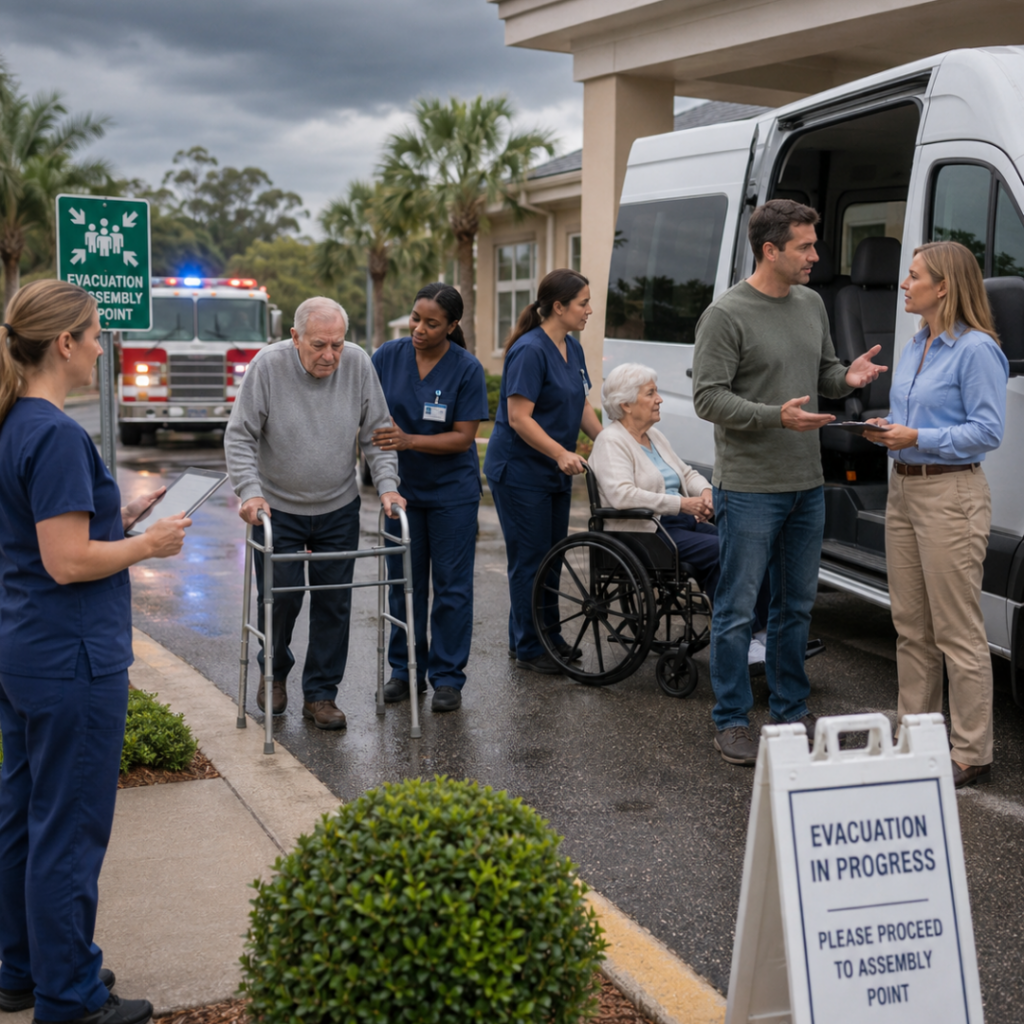
A fire, hurricane, structural failure or other emergency can force residents of an assisted living facility to leave with little warning.
What happens next can depend heavily on the facility’s preparation before the emergency occurs.
That became clear after a partial roof collapse at Aviata at Bradenton Villas in Bradenton on July 25, 2026. The incident forced the evacuation of 157 residents. No injuries were reported, but residents were relocated to other facilities, in some cases significant distances from their families.
For families with a loved one in assisted living, the incident raises an important question:
If this facility had to evacuate tonight, would it be ready?
Florida Requires Assisted Living Facilities to Plan for Emergencies
Emergency preparation is not simply a best practice for Florida assisted living facilities.
Florida law requires the preparation and annual updating of a comprehensive emergency management plan. State law requires those plans to address a range of issues, including:
- Emergency evacuation transportation
- Adequate shelter arrangements
- Emergency supplies and equipment
- Staffing
- Individual identification of residents
- Transfer of resident records
- Communication with families
- Responses to family inquiries
- Post-disaster transportation
- Emergency power, food and water
The comprehensive emergency management plan is also subject to review and approval by the county emergency management agency.
These requirements recognize that evacuating a residential care facility is much more complicated than simply moving people out of a building.
Moving a Resident Is Only Part of the Job
Every resident may have different needs.
One person may need assistance walking. Another may rely on medication management. A resident living with dementia may have difficulty explaining his or her medical history, communicating with unfamiliar caregivers or understanding why a sudden move is taking place.
When residents have to be transferred during an emergency, continuity of information and care becomes particularly important.
Florida’s emergency-management requirements specifically address individual resident identification, transfer of records and communication with families as components of facility emergency planning.
A Practical Idea: Emergency Information Ready to Go
Following the Aviata evacuation, Baron, Herskowitz & Cohen Managing Partner Jon Herskowitz suggested a simple preparedness measure: having essential information readily available for each resident in the event of an emergency transfer.
His suggestion was essentially a bedside “go-bag” containing the information needed if the resident suddenly had to be relocated.
The exact way a facility stores and transfers medical or personal information must comply with applicable privacy and health-care requirements. But the larger concept is practical: critical information should be organized and accessible before an emergency happens.
Depending on the circumstances, useful emergency information may include:
- Resident identification
- Emergency contacts
- Current medical conditions
- Medication information
- Allergies
- Physician and pharmacy information
- Mobility or accessibility needs
- Current care requirements
- Other information necessary for continuity of care
Families Need a Communication Plan Too
One of the most stressful aspects of an emergency can be not knowing where a loved one has been taken.
Following the Aviata evacuation, some families told local news outlets about the uncertainty they experienced while trying to locate or move relatives closer to home.
Florida’s emergency-planning requirements specifically include communication with families and responses to family inquiries.
Before an emergency occurs, families may want to ask:
How will you contact me if my loved one has to be evacuated?
It is also a good idea to make sure the facility has current telephone numbers and other contact information for the people who should receive emergency notifications.
Families may also want to ask:
- How are residents tracked during an evacuation?
- How is medication information transferred?
- How are medical records transferred?
- How are mobility devices and other necessary equipment handled?
- Where might residents be relocated?
- Who should the family contact if it cannot reach the facility?
These questions may seem unnecessary during normal circumstances. During an emergency, the answers can become extremely important.
What Families Can Do After an Emergency Transfer
If your loved one is unexpectedly transferred from a facility, confirm where the resident has been taken and who is currently responsible for his or her care.
Make sure the receiving facility has accurate information regarding medications, medical conditions and necessary care. Ask whether mobility equipment, medical devices or other essential items accompanied the resident.
Families may also want to document what happened during the evacuation and transfer, particularly if there were problems involving medication, medical care, communication or the resident’s physical safety.
Keep copies of communications from the facility and document any injuries or changes in your loved one’s condition following the transfer.
If a resident is injured or experiences a serious disruption in necessary care during an evacuation or relocation, families may want to consult an attorney familiar with Florida assisted living facility to determine whether further investigation is warranted.