


This blog article was updated on August 7, 2026
When families place a loved one in an assisted living facility in Florida, they trust that the building itself will be safe, properly maintained, and suitable for the people who live there. A recent roof collapse in Bradenton has brought renewed attention to what can happen when serious building problems arise in a residential care setting.
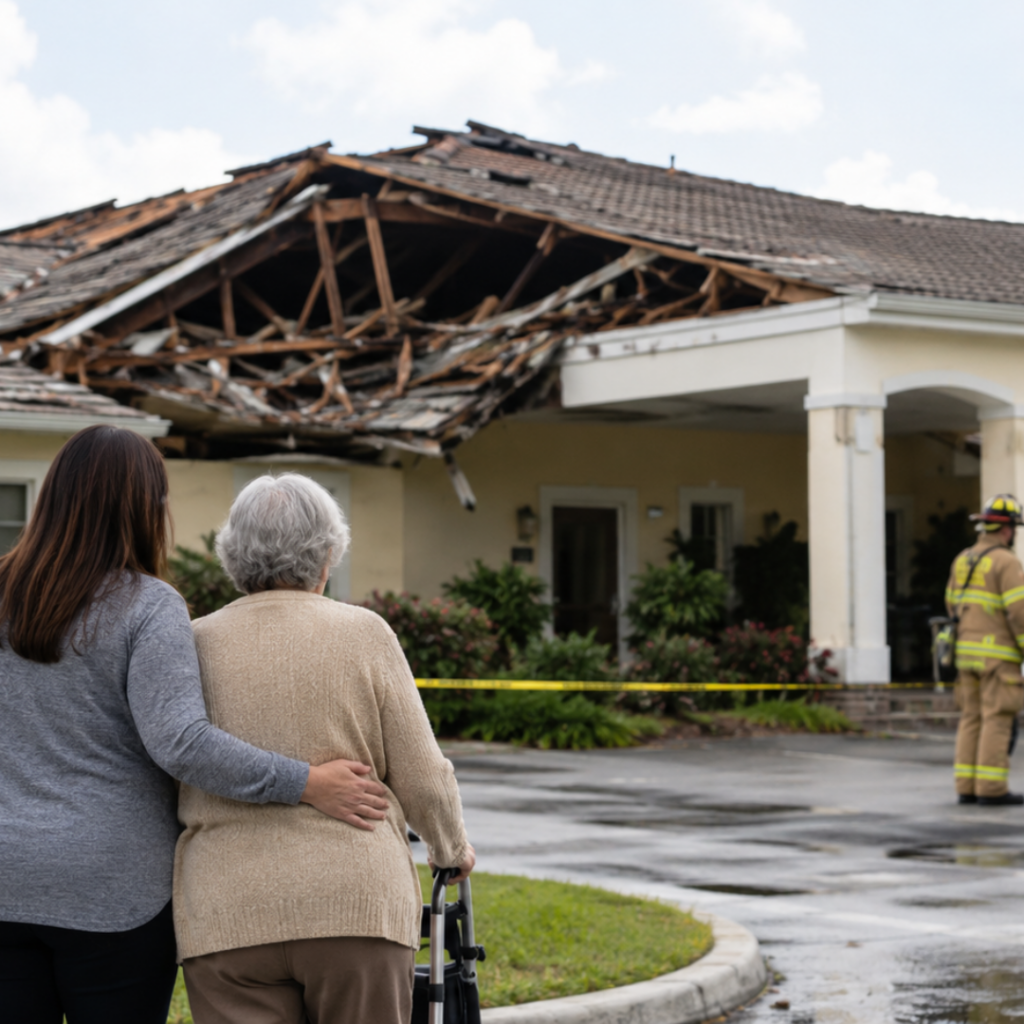
On July 25, 2026, a partial roof collapse at Aviata at Bradenton Villas forced the evacuation of 157 residents. No injuries were reported. Residents were relocated while engineers, contractors, and public officials worked to assess the building and determine what caused the collapse. As of August 10, the cause remained under investigation, and the building remained closed.
The incident is particularly concerning because state records documented building problems at the property years before the collapse. Inspection records also documented water intrusion and storm-related damage.
Those earlier findings do not, by themselves, establish what caused the July 2026 collapse or who may ultimately be responsible. But they demonstrate why building maintenance can become a significant resident-safety issue.
Assisted Living Residents in Florida Have a Right to a Safe Environment
Florida law provides residents of assisted living facilities with specific protections.
Florida’s Assisted Living Facility Resident Bill of Rights states that residents have the right to live in a safe and decent living environment, free from abuse and neglect.
Florida’s physical-plant standards go further. Assisted living facilities are required to provide a safe living environment, remain free of hazards and maintain existing architectural, mechanical, electrical, and structural systems in good working order.
Those requirements matter because many assisted living residents cannot respond to a building emergency as easily as someone living independently. Some residents may have mobility limitations, cognitive impairments or other needs that make evacuation more difficult.
A roof leak, damaged ceiling, electrical issue or other building problem therefore may be more than an ordinary maintenance concern. Depending on the circumstances, it can become a resident-safety concern.
When Warning Signs Appear, What Happens Next Matters
Not every maintenance problem means a facility has acted improperly. Buildings require repairs, unexpected failures can occur, and the existence of a prior deficiency does not necessarily mean it caused a later incident.
What matters is how potentially dangerous conditions are identified, evaluated, and addressed.
When serious or recurring problems are reported, important questions may include:
- When was the condition first identified?
- Who was notified?
- Was the problem inspected?
- What repairs were recommended?
- Were those repairs completed?
- Did the problem continue after the repairs?
- Were additional inspections or repairs necessary?
Those are the kinds of questions that can become important after a serious incident.
Accountability May Extend Beyond Day-to-Day Care
After the collapse, Baron, Herskowitz & Cohen Managing Partner Jon Herskowitz spoke with WWSB ABC7 about the responsibility that comes with caring for older and vulnerable residents.
Facility safety involves more than the work performed by nurses, aides and other caregivers. Decisions about repairs, maintenance, budgets, contractors and capital improvements may involve administrators, operators, owners and other parties.
When a serious incident occurs, understanding what happened can therefore require reviewing more than the events of a single day. Inspection records, repair records, maintenance requests, complaints and communications may all help establish what problems were known and how they were handled.
What Florida Families Can Ask About Facility Safety
Families do not need to wait for a major emergency before asking questions about conditions they observe.
If you notice recurring leaks, water damage, damaged ceilings or walls, electrical problems, or other potentially dangerous conditions, consider asking facility management:
- Has the problem been formally reported?
- When was it first identified?
- Has it been inspected or evaluated?
- What repairs have been completed?
- Are additional repairs planned?
- Does the condition affect areas used by residents?
Families can also review inspection and deficiency information made publicly available by the Florida Agency for Health Care Administration.
For significant concerns, keeping copies of emails, photographs, notices and other communications may also be helpful.
We Help Families Seek Answers
At Baron, Herskowitz & Cohen, we understand the trust families place in assisted living, nursing homes and long-term care facilities. When that trust is broken through neglect, abuse, or improper medical treatment, families deserve answers.
If you believe a loved one may have suffered harm due to overmedication or other forms of nursing home neglect, our team of Florida nursing home attorneys can help you understand your rights and evaluate your legal options.